COMPANY NEWS
How to select the suitable lightning rod for my electricity transmission project
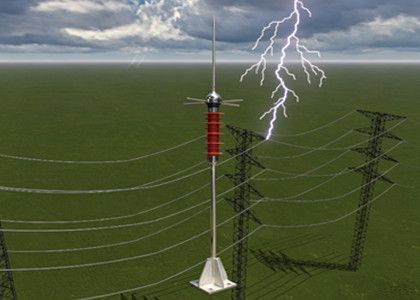
HEPL-RYSeries of high voltage power lines
Product Introduction of Electromagnetic Pulse Lightning Protection Device
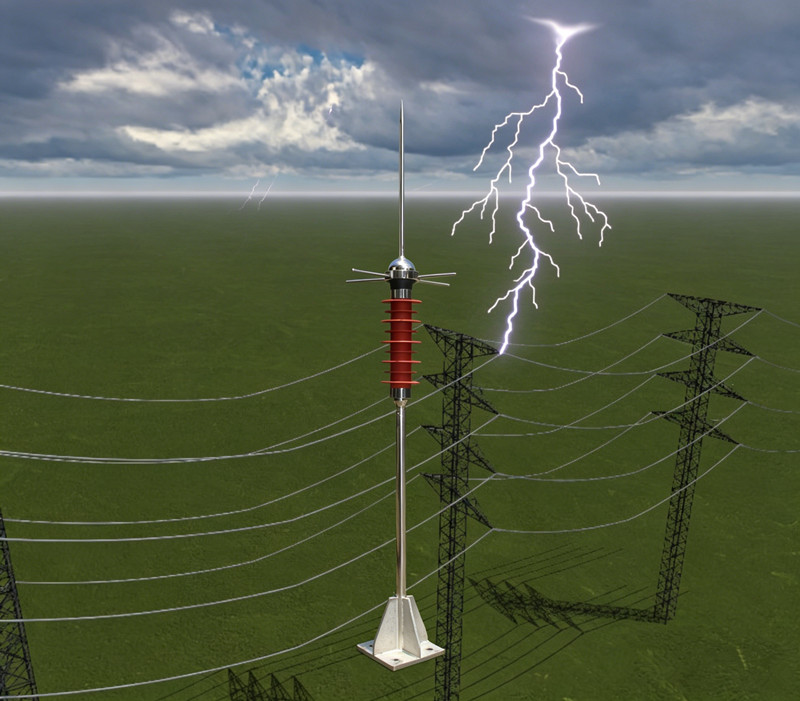
Product Introduction and Principle
The HEPL-RY series high-voltage electromagnetic pulse lightning protection device for power lines is a discharge gap switch type direct lightning protection device developed and tested by Guangzhou Leisdun Electric Technology Development Co., Ltd. after years of research and development.
The research and development technology principle is that the HEPL-RY series high-voltage electromagnetic pulse lightning protection device for power lines belongs to the discharge gap switch type direct lightning protection device. It introduces the lightning current into the high-voltage electromagnetic pulse wave resistance device inside the device through a lightning arrester. While forming a self energy dissipation circuit oscillation, it discharges and absorbs part of the lightning energy through the circuit capacitor gap, thereby softening the lightning current, reducing the amplitude and waveform steepness of the lightning current.
The installation of this series of lightning protection devices on overhead transmission lines can significantly reduce the probability of lightning flashover, guide the discharge of lightning energy to the ground, and avoid the generation of large step voltages, effectively preventing the occurrence of flashover and counterattack on the lines.
Product structure composition
The main structure of the HEPL-RY series high-voltage electromagnetic pulse lightning protection device for power lines consists of three parts: the lightning rod, the high-voltage electromagnetic pulse wave resistance device (referred to as the wave resistance body), and the support needle rod. Its structure is shown in Figure 2 below.
Product Technical Features
1.Technical parameters and performance requirements:
The product body of the HEPL-RY series high-voltage electromagnetic pulse lightning protection device for power lines mainly consists of stainless steel lightning arrester, silicone rubber jacket, high-voltage electromagnetic pulse wave resistance device, stainless steel support needle rod, and grounding conductor.
2.Factory inspection requirements:
The overall surface of the HEPL-RY series high-voltage electromagnetic pulse lightning protection device for power lines should be clean and free of dents, scratches, and deformations during factory acceptance. The overall components and their assembly positions should be firm, without virtual soldering, cracking, or mechanical damage.
The surface area of a single defect on the silicone rubber jacket of the device (such as missing glue, impurities, protrusions, etc.) should not exceed 5mm2, and the depth should not exceed 1mm. The raised surface and joint should be cleaned and leveled, and the raised height should not exceed 0.8mm. The raised height of the bonding joint should not exceed 1.2mm, and the total defect area should not exceed 0.2% of the total area of the silicone rubber jacket.
The lightning protection device's wave resistance body should undergo 100% testing, that is, high voltage impact testing should be conducted on the wave resistance body in two states: not connected to the circuit or connected to the circuit. During the experiment, charge the impulse current testing device to generate a 4/10 μ s impulse current with an amplitude of 10kA~120kA, and compare the impulse wave modes in the two states for measurement.
In the connected circuit state, the surge waveform of the surge resistor of the lightning protection device should have a wave head time of ≥ 12 μ s and a current amplitude of ≤ 60KA. If the wave head time is extended by more than 200% compared to the unconnected circuit state, the current amplitude should decrease by no less than 50%, and the current steepness should decrease by no less than 85%, it is a qualified product.
3.Product advantages:
Suitable for transmission lines of various voltage levels;
Small size, light weight, easy to install on towers;
High protection performance, can effectively reduce lightning current amplitude by more than 50% and steepness by more than 85%. Compared with conventional lightning rods (not suitable for installation on 220kV and below voltage level transmission lines with low lightning resistance), it is suitable for installation on ultra-high voltage and below AC/DC transmission lines, with a wider coverage range;
Even in the event of a malfunction, it does not affect the normal, safe, and reliable power transmission of the line;
The product is maintenance free and can significantly improve the lightning resistance level of the line, reducing the lightning flashover rate of the line.
4.Conditions of Use
The ambient temperature is between -50 ℃ and+50 ℃;
The maximum wind speed shall not exceed 48m/s;
Areas with seismic intensity of 7 degrees or below;
The thickness of ice cover shall not exceed 2cm;
Note: The above are general usage conditions. In other special environmental situations, the manufacturer should optimize the parameters or adjust the structure of the product.
Applicability analysis of the product for high-voltage transmission lines in the power grid
Due to the wide distribution range and diverse terrain along the transmission lines of China's State Grid, as well as the complex characteristics of lightning activity in different regions. According to meteorological data statistics, thunderstorms have been increasing year by year in many regions of China, and the areas with frequent lightning activity have expanded.The 35KV-750kV overhead high-voltage transmission line, as the outdoor main channel of the power grid transmission line, will cause significant economic losses in the event of a lightning strike tripping fault.
For the increasing risk of lightning strikes in high-voltage transmission lines, traditional measures such as enhancing insulation, reducing protection angle, and lowering grounding resistance can no longer fully meet the direct lightning protection needs of high-voltage transmission lines. Therefore, the safety and stability of high-voltage transmission line operation are facing huge challenges.
To cope with the risk of lightning strikes on high-voltage transmission lines, the HEPL-RY series high-voltage electromagnetic pulse lightning protection device for power lines is a new type of direct lightning protection device for high-voltage transmission lines, Its own performance characteristics perfectly solve the risks and challenges of high-voltage transmission lines mentioned above. By installing HEPL-RY series high-voltage electromagnetic pulse lightning protection devices on high-voltage transmission lines, the risk of lightning tripping can be directly reduced, thereby ensuring the safe and stable operation of intelligent power grids.
After years of research and exploration on lightning protection technology for high-voltage transmission lines, as well as statistical analysis of actual operating line data, and combined with the characteristics of different terrains and landforms, we have summarized that direct lightning strikes have different characteristics when high-voltage transmission line towers pass through these different terrains:
1)The tower on the mountaintop is located high and is prone to direct lightning strikes;
2)The towers along the mountain slope have high and low spans at both ends, and there are angles, which can easily lead to derailment;
3)There is a large span between two mountaintops, which is prone to flanking attacks;
4)The towers along the valley floor have a more complex climate and are prone to lightning strikes;
Meanwhile, based on the distribution map of the State Grid's minefields, lightning risk assessment, and operational experience, For important railway lines located on special terrains such as mountaintops, slopes, and passes, as well as towers with large spans, large distances, high ground to ground heights for conductors, tension angle towers, front and rear straight towers, and towers in C1 and above minefields, After comprehensive analysis, it is necessary to adopt the installation of HEPL-RY series high-voltage electromagnetic pulse lightning protection devices for the safety protection of power lines, in order to achieve the safe and stable operation of smart grids.
2.HEPL-RY Comparison between HEPL-RY series high-voltage electromagnetic pulse lightning protection device and traditional controllable discharge lightning rod for power lines
Controllable discharge lightning rod is currently the most widely used tower top lightning rod in China's transmission lines. It is a special structured lightning rod device installed on the top of transmission line towers, The application goal of controllable discharge lightning rod is to reduce the winding rate of the line and reduce the lightning tripping rate of the line. However, controllable discharge lightning rod has certain requirements for the grounding resistance of the tower. A high grounding resistance will affect the effectiveness of use. Generally, towers equipped with controllable discharge lightning rod require their grounding resistance to be no higher than 10 Ω, For areas with high soil resistivity, it is required that the grounding resistance should not exceed 20 Ω. Therefore, for transmission towers with high grounding resistance, resistance reduction optimization and renovation are needed, which increases the cost of lightning protection renovation. On the other hand, controllable discharge lightning rods do not have the function of reducing the amplitude and steepness of lightning currents. Although this product has a good effect on line winding protection, it is almost unable to protect against line counterattacks. At the same time, the lightning protection effect is not obvious in heavily thunderstorm stricken areas.
Through on-site experimental data verification, the HEPL-RY series high-voltage electromagnetic pulse lightning protection device for power lines has been installed and operated on high-voltage transmission lines, with excellent lightning protection effect, This product can soften the lightning current, directly reduce the amplitude and steepness of the lightning current, guide the discharge of lightning energy to the ground, avoid the generation of large step voltages, effectively prevent line winding and counterattacks, and has low requirements for grounding resistance.
The HEPL-RY series high-voltage electromagnetic pulse lightning protection device for power lines can provide equivalent defense for transmission lines when installed on double circuit lines running on the same pole. Based on existing research, after installing the HEPL-RY series high-voltage electromagnetic pulse lightning protection device for power lines, there will still be no counterattack when a lightning current with an amplitude of 300kA strikes the tower directly.
The HEPL-RY series high-voltage electromagnetic pulse lightning protection device for power lines has a simple structure and is very light in weight. The total weight of the device does not exceed 20kg, and it has the technical conditions for live installation. It can be easily applied to towers in complex terrains such as mountains and hills without the need for regular replacement and maintenance. At a lower cost, it can effectively achieve a significant reduction in the lightning trip rate of power lines.
Installation
1. Principles for selecting installation location:
Based on the lightning risk assessment results, when determining the high-risk towers for lightning strikes, attention should be paid to towers that are prone to lightning strikes at higher locations such as mountain tops and slopes, as well as towers that have been struck by lightning and nearby towers.
2.Model selection principle:
According to the voltage level of the high-voltage transmission line, consult the manufacturer to select the matching model product
3.Installation method
This product should generally be installed at the highest point of the tower;
Select the corresponding installation and fixing methods based on the structure of different transmission line towers. The specific installation and fixing methods can be designed by contacting the equipment manufacturer for a reasonable plan.
The conventional installation and fixing method is shown in the following figure: