INDUSTRY NEWS
What is the Advantages of FRP Lightning Rods Designed for Energy Storage & Photovoltaic Projects
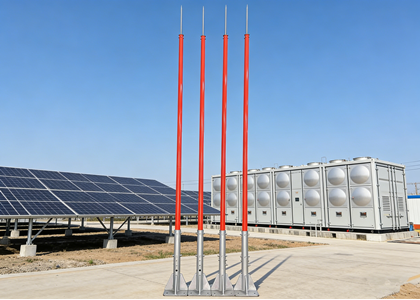
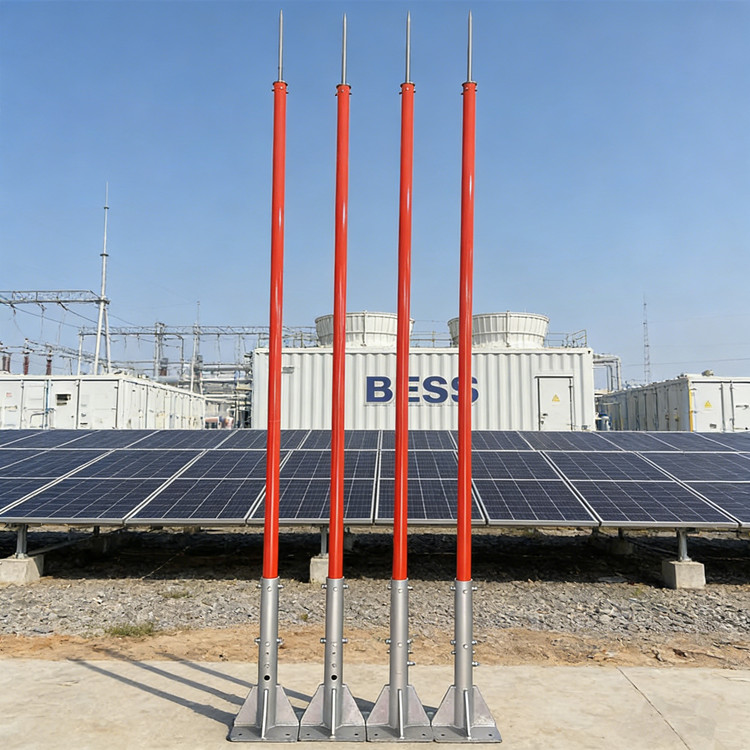
Advantages of FRP Lightning Rods Designed for Energy Storage & Photovoltaic Projects
1. Excellent insulation performance, non-conductive
FRP is inherently insulating and does not form conductive paths, avoiding breakdown of PV modules, inverters, and energy storage battery clusters by induced lightning and lightning counterattack, greatly reducing the risk of lightning damage to equipment.
2. Corrosion & aging resistance, suitable for long-term outdoor use
PV and energy storage power stations are often located in harsh environments such as coastal areas, saline-alkali lands, and industrial zones. FRP is acid and alkali resistant, UV resistant, and rustproof, with a service life far exceeding that of metal lightning rods.
3. Light weight and easy installation
Much lighter than metal lightning rods of the same height, reducing the bearing pressure on supports, roofs, and containerized energy storage cabins, ensuring safer and faster construction.
4. Good wind and seismic resistance
The material features high toughness, not easy to crack or deform, making it ideal for PV power stations and mountainous energy storage projects in high-wind-speed areas.
5. Non-magnetic and metal-free, no interference with monitoring equipment
No electromagnetic interference with PV combiner boxes, energy storage BMS, ammeters, sensors, etc., ensuring accurate monitoring and data of the power station.
6. Attractive appearance, compatible with modern power station design
Available in eye-catching colors such as red and white, meeting safety warning requirements while coordinating with PV panels and energy storage containers.
7. Cost-effective and low maintenance
Basically maintenance-free after one-time installation, without regular derusting and painting like galvanized steel, making it more economical in the long run.