INDUSTRY NEWS
Why ESE lightning rod more suitable for solar pv solar farm and bess power plant lightning protection project?
Advantages of Early Streamer Emission (ESE) Air Terminals in PV & Energy Storage Projects
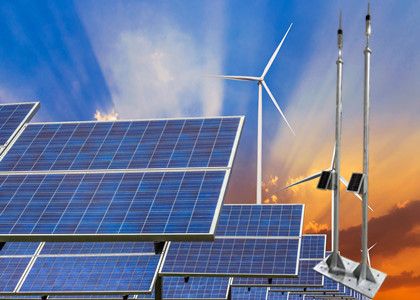
Early Streamer Emission (ESE) air terminals offer core advantages in photovoltaic (PV) and energy storage projects, including active lightning attraction, large protection range, resistance to shielding and side flashes, adaptability to large sites and high-value equipment, and compatibility with power generation and operation & maintenance, which significantly improve system safety and economic efficiency.
I. Core Technical Principle (vs. Conventional Air Terminals)
Conventional air terminals passively wait until a downward leader approaches before generating an upward leader.
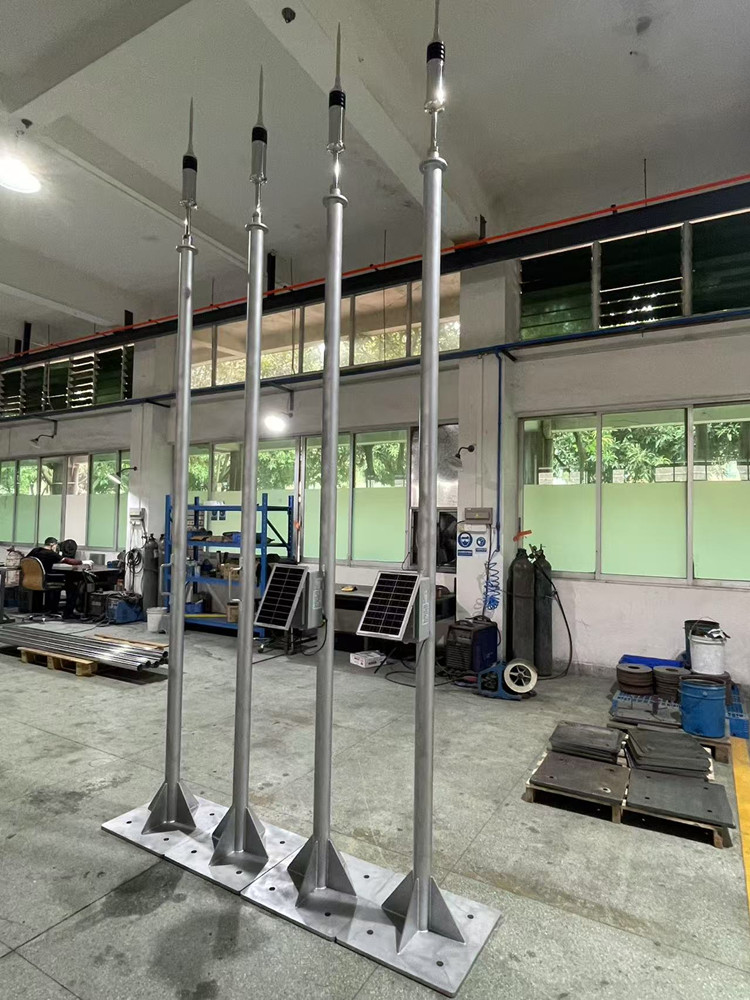
ESE air terminals, through electric field induction → pulse triggering → early ionization, actively emit an upward leader 20–100μs in advance before the formation of a natural leader, preemptively connecting with the thundercloud downward leader to achieve accurate lightning attachment.
II. Key Advantages in PV & Energy Storage Projects
1. Active Protection, Greatly Improved Safety & Reliability
· Active lightning interception, reduced risk of shielding and side flashes: Proactively establish a leader channel, virtually eliminating the probability of lightning bypassing the air terminal and striking PV modules or energy storage containers.
· Protect high-value sensitive equipment: Precisely guide lightning current to avoid direct lightning damage to core devices such as PV panels, inverters, combiner boxes, and energy storage battery clusters.
· Suppress electromagnetic pulses (EMP): The leader junction point is far from the needle tip, reducing lightning current steepness (di/dt) and electromagnetic interference to PCS, BMS, and monitoring systems.
2. Larger Protection Range, Significantly Lower System Costs
· Larger protection radius at the same height: 30%–200% wider than conventional air terminals (depending on model and standards).
· Fewer air terminals required: Cover large-scale ground PV/energy storage stations with fewer lightning receptors, greatly saving costs on materials, installation, and grounding grids.
· Adapt to large-area and distributed layouts: Perfectly match the wide-area protection needs of PV arrays and energy storage container groups.
3. Compatible with PV Characteristics, Ensuring Power Generation Revenue
· Shadow-free or liftable design: Lowered storage in non-thunderstorm periods to avoid shading losses, ensuring maximum light intake for PV modules, especially suitable for high-density arrays.
· All-round environmental adaptability: Salt spray resistance, plateau resistance, wind resistance, and corrosion resistance, suitable for complex terrains and climates such as mountains, coasts, and plateaus.
4. Advantages in Operation & Maintenance and Service Life
· Smart / maintenance-free: Passive or low-power design with no vulnerable electronic components, stable for long-term use; some models support remote monitoring and automatic lifting, reducing manual inspection costs.
· High current-carrying capacity: Withstand 100–400kA (10/350μs) lightning current impact, suitable for heavy lightning activity areas.
· Standard compliant: Meet domestic and international specifications such as QX/T 106, GB 50057, NFC 17‑102, ensuring compliance in design and acceptance.
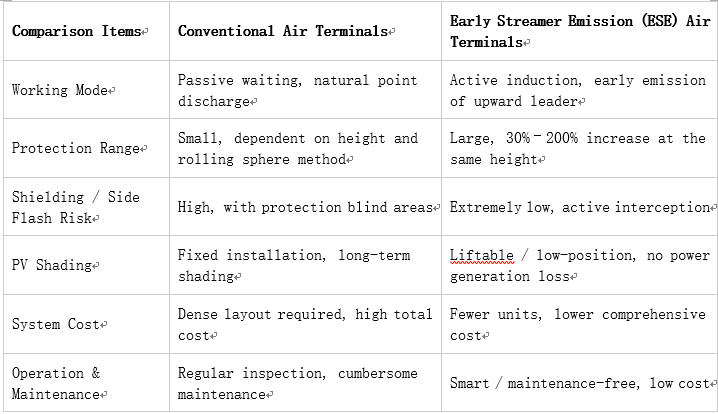
III. Core Comparison with Conventional Air Terminals (PV & Energy Storage Scenarios)
IV. Typical Application Scenarios
· Large-scale ground PV power stations, mountain / plateau PV projects
· Centralized / distributed energy storage power stations, containerized energy storage clusters
· Wind-PV-Storage integrated stations, coastal / island areas with high salt spray