INDUSTRY NEWS
Why the the BESS Photovoltaic Power Plant need Grounding Resistance Online Monitoring System
Function of Online Grounding Resistance Tester
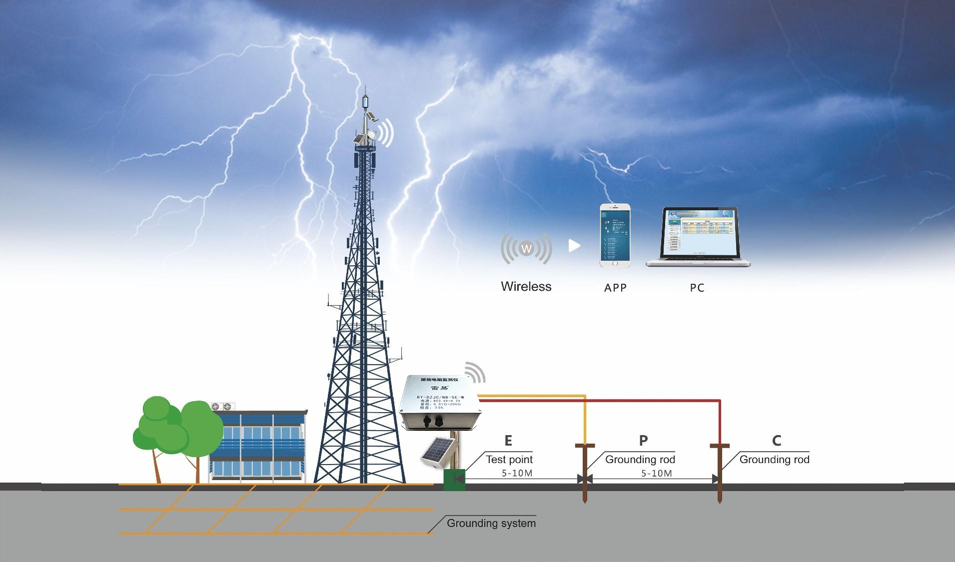
The core function of an online grounding resistance tester is to monitor the grounding resistance value in real time/regularly while the grounding system is in operation without power cut or wire disconnection, and capture abnormal changes of the grounding system simultaneously. It prevents equipment malfunctions, personal electric shocks, lightning accidents and other problems caused by grounding failure, and is a core monitoring device for the safe operation of grounding systems in fields such as electric power, new energy, chemical industry, and rail transit.
Different from the traditional offline grounding resistance tester (which requires power cut and disconnection of grounding leads for testing), it solves the pain point of uninterruptible testing for key equipment in industrial sites and realizes the normalized and intelligent monitoring of grounding systems. Its core functions and application values are mainly reflected in the following aspects:
1. Real-time monitoring to avoid the risk of sudden grounding failure
It continuously collects key parameters such as grounding resistance, grounding voltage and leakage current, replacing the lag of manual regular offline testing. It can detect the over-standard grounding resistance caused by grounding body corrosion, loose/broken grounding leads, and changes in soil resistivity (such as drought and ponding) in the first place, so as to avoid sudden accidents such as equipment enclosure electrification, short-circuit tripping and lightning damage due to poor grounding during equipment operation.
2. Uninterruptible testing to ensure continuous production/system operation
For scenarios that cannot be powered off at will such as photovoltaic power stations, substations, energy storage power stations, chemical production units and data centers, it can complete testing when the system is in normal operation without disconnecting the equipment from the grounding grid. It not only meets the testing requirements for grounding safety, but also avoids production losses and system interruptions caused by shutdown for testing.
3. Data recording and trend analysis to realize preventive maintenance
It automatically stores historical testing data and can generate resistance change curves. By analyzing the trends, it judges the deterioration speed of the grounding system (such as the slow rise of resistance caused by the annual corrosion of the grounding body), helping operation and maintenance personnel formulate maintenance plans in advance (such as driving additional grounding bodies and replacing grounding leads). It converts "post-fault rush repair" into "precautionary prevention" and reduces maintenance costs.
4. Abnormal alarm for quick fault location
When the grounding resistance exceeds the preset threshold (e.g., 4Ω for low-voltage systems and 10Ω for high-voltage systems), or a broken grounding wire and abnormal leakage current are detected, the device will issue an alarm through sound and light, SMS, remote platform push and other methods. Some high-end models can also locate the fault area by combining multi-measurement point data, which greatly shortens the fault troubleshooting time for operation and maintenance personnel.
5. Adapt to complex grounding grids and improve testing accuracy
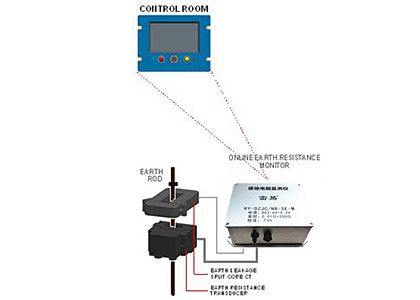
Aiming at the complex conditions of multiple devices sharing a grounding grid, existence of stray current and loops in grounding leads in industrial sites, it adopts special testing algorithms (such as the different frequency method and clamp method) to avoid on-site interference. Compared with traditional offline testing, it is more suitable for complex grounding systems, and the testing results are more in line with the actual operation status.
6. Remote monitoring and intelligent management
Most online grounding resistance testers support communication protocols such as 4G/5G, RS485 and Modbus, and can be connected to the enterprise's intelligent operation and maintenance platform and Supervisory Control and Data Acquisition (SCADA) system, realizing centralized monitoring, remote viewing and unified management of grounding data at multiple measurement points. It adapts to the intelligent operation and maintenance needs of large parks, power stations, industrial and mining enterprises.
Typical Application Scenarios
· New energy field: Grounding monitoring of photovoltaic inverters/junction boxes, energy storage battery cabinets and wind turbine generators;
· Electric power field: Grounding grid monitoring of substations, distribution stations and high-voltage transmission line towers;
· Industrial field: Grounding safety monitoring of chemical reactors, metallurgical equipment and explosion-proof workshops;
· Public facilities: Continuous grounding monitoring of data centers, rail transit and hospital operating rooms.
In short, the traditional offline tester is a "regular physical examination", while the online grounding resistance tester is like a "24-hour ECG monitor" installed for the grounding system. It makes the safety status of the grounding system monitorable, pre-warnable and traceable, and is an important guarantee for industrial safe production and the reliable operation of electrical systems.