COMPANY NEWS
The use of FRP fiberglass lightning rod
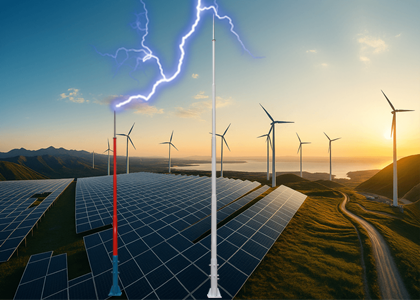
Core Functions and Engineering Application Value of FRP Lightning Rods
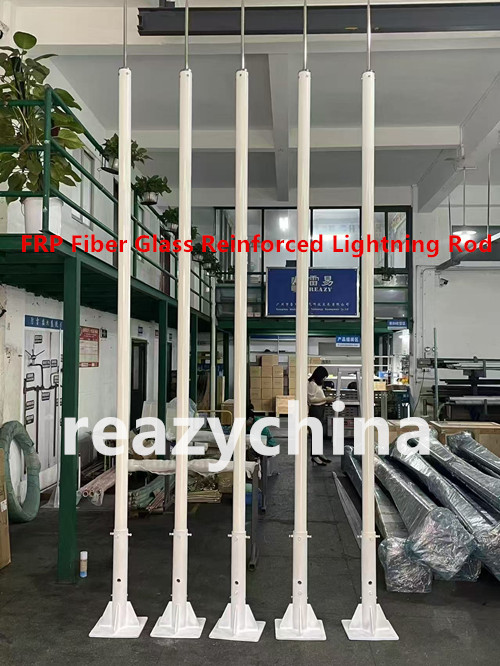
FRP (Fiber Reinforced Polymer) Lightning Rods are specialized lightning protection air terminals featuring an insulating outer shell + internal conductive core. Their core function is to protect protected objects (such as photovoltaic modules, chemical equipment, communication towers, etc.) from direct lightning strike damage through the standard lightning protection logic of interception, conduction, and dissipation. Meanwhile, leveraging the unique advantages of FRP materials, they adapt to special scenarios that conventional metal lightning rods cannot meet. Their functions can be elaborated from three dimensions: core functions, differentiated advantages enabled by materials, and engineering application value, in line with international standards such as IEC 62305.
I. Core Functions: Implementing Direct Lightning Protection in Compliance with IEC 62305 Standards
Essentially, FRP lightning rods are air terminals with an insulating outer shell wrapping a conductive core. Their core functions are consistent with traditional metal lightning rods, fully complying with the technical requirements for "air terminals" specified in IEC 62305-3 Protection Against Lightning – Part 3: Physical Damage to Structures and Life Hazard.
1.Lightning Interception: The top metal air terminal (typically made of copper or stainless steel, meeting IEC 62305 requirements for conductivity and corrosion resistance of air terminals) actively attracts lightning discharges, serving as the preferred entry point for lightning current and preventing direct lightning strikes on protected objects (e.g., PV panels, equipment enclosures, building main structures).
2.Lightning Conduction: The internal conductive core (copper busbar, copper cable, or copper-clad steel core, with cross-sectional area calculated in accordance with IEC 62305-4 Protection Against Lightning – Part 4: Design, Installation, Maintenance and Inspection of Lightning Protection Systems to ensure voltage drop meets requirements during lightning current passage) safely guides the massive lightning current (ranging from hundreds of kiloamperes to thousands of kiloamperes) captured by the air terminal to the down conductors, avoiding secondary hazards caused by current shunting on the shell or surrounding objects.
3.Current Dissipation: Cooperating with down conductors and grounding systems, the lightning current is ultimately dissipated into the ground, forming a complete "interception-conduction-dissipation" path. This maintains the potential of the protected object consistent with the ground, preventing overvoltage caused by lightning strikes from breaking down insulation, burning equipment, or triggering fires and explosions.
II. Differentiated Advantages Enabled by Materials: Core Value for Special Scenarios
The insulation, corrosion resistance, lightweight, and other characteristics of FRP (fiber-reinforced composite material) make FRP lightning rods irreplaceable by traditional metal lightning rods (galvanized steel, stainless steel) in the following scenarios, especially suitable for special needs such as photovoltaic power plants, chemical parks, and marine environments:
1. Insulation and Induction Protection for Sensitive Electronic Equipment
●The FRP outer shell is a high-insulation material (breakdown voltage ≥20kV/mm), which does not form an "induction loop" like metal conductors. During lightning discharges, it can prevent induced overvoltage generated by the lightning rod itself from invading sensitive electronic equipment such as PV inverters, communication devices, and monitoring systems, reducing the risk of equipment malfunctions or burnout (complying with IEC 62305-2 Protection Against Lightning – Part 2: Environment, Lightning Parameters requirements for induction protection of electronic equipment).
●Application Scenarios: PV module arrays in solar power stations, tops of data center computer rooms, radar stations, and other locations sensitive to electromagnetic induction.
2. Corrosion Resistance and Aging Resistance for Harsh Environments
●FRP materials are resistant to acids, alkalis, salt spray, and rust, enabling long-term use in marine environments (high salt spray concentration), chemical parks (corrosive gases), and high-humidity areas (e.g., coastal PV power stations). Their service life can reach 20-30 years (2-3 times that of traditional galvanized steel lightning rods), eliminating the need for frequent maintenance and replacement.
●Comparison with Traditional Metal Lightning Rods: Metal materials are prone to air terminal rust and down conductor breakage in corrosive environments, leading to lightning protection failure. FRP lightning rods can avoid such issues and reduce operation and maintenance costs (complying with IEC 62305-6 Protection Against Lightning – Part 6: Maintenance of Lightning Protection Systems requirements for durability of lightning protection devices in harsh environments).
3. Lightweight and Easy Installation, Reducing Structural Load
●The density of FRP is only 1/4-1/5 that of steel (approximately 1.8-2.0g/cm³). An FRP lightning rod of the same height (e.g., 10-15m) weighs only 1/3-1/2 of a metal lightning rod, significantly reducing the bearing load on supports, roofs, and towers.
●Engineering Value: When installed on color steel tile roofs, lightweight steel structure supports, communication towers, and other structures sensitive to load-bearing in PV power stations, no additional structural reinforcement is required, simplifying the installation process and shortening the construction period (complying with IEC 62305-3 requirements for structural safety of lightning protection device installation).
4. No Electromagnetic Interference, Adapting to Special Industry Needs
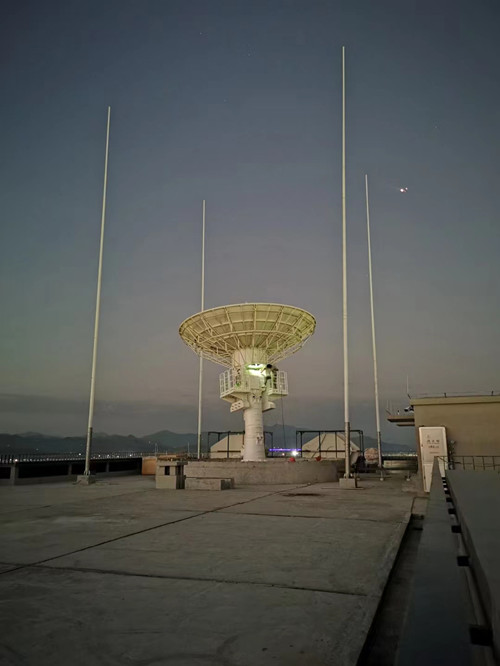
●The FRP outer shell is non-conductive and does not produce electromagnetic shielding, making it suitable for use in locations requiring electromagnetic signal penetration such as radar, satellite communication, and microwave stations. It avoids signal transmission obstruction or interference caused by metal lightning rods.
●Application Scenarios: Monitoring and communication towers in PV power stations, areas around airport navigation facilities, satellite receiving stations, etc.
5. Safety Against Electric Shock, Reducing Operation and Maintenance Risks
●The FRP outer shell is insulating. Even during thunderstorms or equipment maintenance, personnel will not suffer electric shock if they accidentally touch the shell, improving safety during operation and maintenance (complying with GB/T 21431-2015 Technical Specifications for Inspection of Building Lightning Protection Devices requirements for the safety of lightning protection devices).
III. Key Considerations in Engineering Applications (Ensuring Effective Functionality)
The core functions of FRP lightning rods rely on the "continuity of the conductive core" and the "compatibility of the overall lightning protection system". In engineering applications, the following requirements must be met to avoid functional failure:
1.Conductivity of the Conductive Core: The internal core should be made of high-conductivity materials (copper core conductivity ≥58S/m, copper-clad steel core ≥30S/m), and the cross-sectional area should be calculated in accordance with IEC 62305-4 (e.g., core cross-sectional area ≥50mm² copper for Class I lightning protection buildings) to ensure smooth passage of lightning current.
2.Connection Between Air Terminal and Core: The air terminal and core should be crimped or welded with a contact resistance ≤0.05Ω to avoid local overheating and burnout due to poor contact.
3.Compatibility with Down Conductors and Grounding Systems: The core should be reliably connected to down conductors (copper cables are recommended with cross-sectional area ≥35mm²), and the grounding resistance of the grounding system should meet the requirements of the protected object (e.g., grounding resistance ≤4Ω for PV power stations, complying with GB 50057-2010 Code for Design of Protection of Structures Against Lightning).
4.Installation Height and Protection Range: The installation height should be calculated using the rolling sphere method or protection angle method specified in IEC 62305-3 (e.g., the height of the lightning rod should cover the entire array area when protecting PV module arrays) to ensure the protected object is within the effective protection range.
5.Material Selection Adapting to the Environment: For highly corrosive environments (e.g., chemical parks), FRP materials with higher corrosion resistance (such as vinyl ester resin-based FRP) should be selected to avoid core corrosion caused by aging and damage of the outer shell.
IV. Summary: Core Function Positioning of FRP Lightning Rods
The core function of FRP lightning rods is to meet the requirements of conventional direct lightning protection (interception, conduction, dissipation) while addressing the pain points of special scenarios through material characteristics. They are particularly suitable for locations requiring insulation and induction protection, corrosion and aging resistance, lightweight installation, and no electromagnetic interference (such as PV power stations, chemical equipment, offshore platforms, communication towers, etc.). Their role is not only "lightning protection" but also a comprehensive solution for "adapting to special environments, protecting sensitive equipment, and reducing operation and maintenance costs", fully complying with the technical requirements and engineering practice needs of international standards such as IEC 62305 for lightning protection devices.
LEISIDUN is a professional fiberglass lightning rod manufacturer from China, which can provide customized FRP fiberglass lightning rod lightning protection solutions for your engineering projects. Search reazychina on Google for more lightning protection solutions and knowledge.