INDUSTRY NEWS
How the ESE Air Terminal ESE Lightning Rod protect the objects by active discharge functions
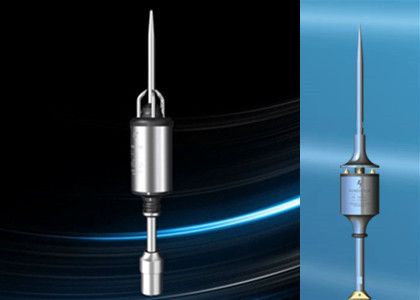
The early streamer emission (ESE) lightning rod is a lightning protection device designed based on the principle of active lightning attraction. Its core function is to trigger lightning discharge in advance, guide the lightning to itself, and safely conduct the current into the ground, thereby protecting surrounding buildings and equipment from lightning damage. The following is a detailed introduction from the aspects of working principle, core characteristics, application scenarios, etc.:
I. Working Principle
Traditional lightning rods mainly rely on the "point discharge" effect, attracting lightning to strike the tip through their height, and then discharging the current through down conductors and grounding devices. The early streamer emission lightning rod adds an "active triggering" mechanism on this basis:
1.Electric field induction: When a thundercloud approaches, the top of the lightning rod will accumulate a large amount of charge due to electrostatic induction, forming a strong electric field.
2.Advanced ionization: The triggering device inside the lightning rod (such as high-voltage gaps, semiconductor components, etc.) will actively generate an upward "leader discharge" (i.e., a weak ionization channel) before lightning is formed, breaking down the air in advance.
3.Lightning guidance: This pre-formed ionization channel will preferentially connect with the downward leader in the thundercloud, "pulling" the lightning towards the lightning rod. It triggers the discharge process earlier than traditional lightning rods, thereby expanding the protection range.
II. Core Characteristics
●Larger protection range: Due to the advance triggering of discharge, its protection radius is usually 30%-50% larger than that of traditional lightning rods of the same height (specific values need to be calculated according to height and model).
●Faster response speed: It can actively intervene in the early stage of lightning formation, reducing the probability of "side strike" (i.e., lightning bypassing the lightning rod and hitting nearby objects) on the protected objects.
●Stronger adaptability: Suitable for complex terrains (such as mountainous areas, high-rise building groups) or places with extremely high lightning protection requirements (such as substations, oil depots, communication base stations, etc.).
●Need to be matched with a perfect grounding system: Although it actively attracts lightning, the discharge of lightning current still depends on a low-impedance grounding device. Otherwise, secondary damage (such as step voltage, contact voltage) may be caused by local high voltage.
III. Application Scenarios
●Large industrial facilities: such as power plants, chemical plants, oil refineries, etc.
●High-rise buildings and landmark buildings: such as skyscrapers, TV towers, bridges, etc.
●Flammable and explosive places: such as oil depots, gas stations, dangerous goods warehouses, etc.
●Environments with precision electronic equipment: such as data centers, communication computer rooms, hospital operating rooms, etc. (need to be matched with secondary protection such as surge protectors).
IV. Differences from Traditional Lightning Rods
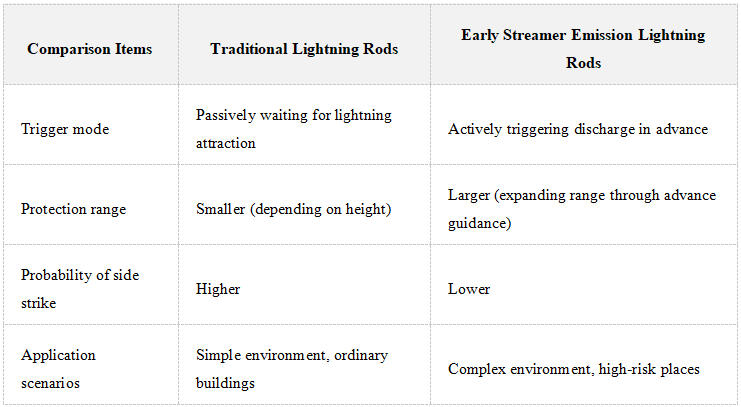
In conclusion, the early streamer emission lightning rod improves lightning protection efficiency through "active lightning attraction" technology, and is an important choice for high-risk scenarios in modern lightning protection projects, but it needs to be applied scientifically according to actual needs.